A thin wrapper around targets::tar_network(): runs it, then converts
its vertices/edges result with as_dag(), keeping type (which
ggplot_dag() draws as the node shape, see targets_node_shapes()),
status, description, seconds, bytes and branches.
Usage
tar_dag(targets_only = TRUE, envir = parent.frame(), ...)Arguments
- targets_only
Passed to
targets::tar_network();TRUE(unliketar_network()'s own default ofFALSE) because imported functions and objects clutter a metro plot.- envir
Environment to run the target script in. Forwarded explicitly (rather than left to
tar_network()'s own default) so it resolves to the caller's environment, not aggtargetsfunction frame.- ...
Passed to
targets::tar_network():names,shortcut,allow,exclude,outdated,reporter,callr_function,callr_arguments,script,store.names/allow/excludeaccept tidyselect helpers exactly as intar_visnetwork().
Value
A dag (see as_dag()).
Details
description is the one free-form field targets has for a target, and
can hold the stage it belongs to, for dag_collapse() to collapse the
pipeline by: see "Collapsing a pipeline by stage" in tar_ggplot().
Examples
targets::tar_dir({ # doesn't pollute the working directory
  targets::tar_script(list(
    targets::tar_target(x, 1),
    targets::tar_target(y, x + 1)
  ))
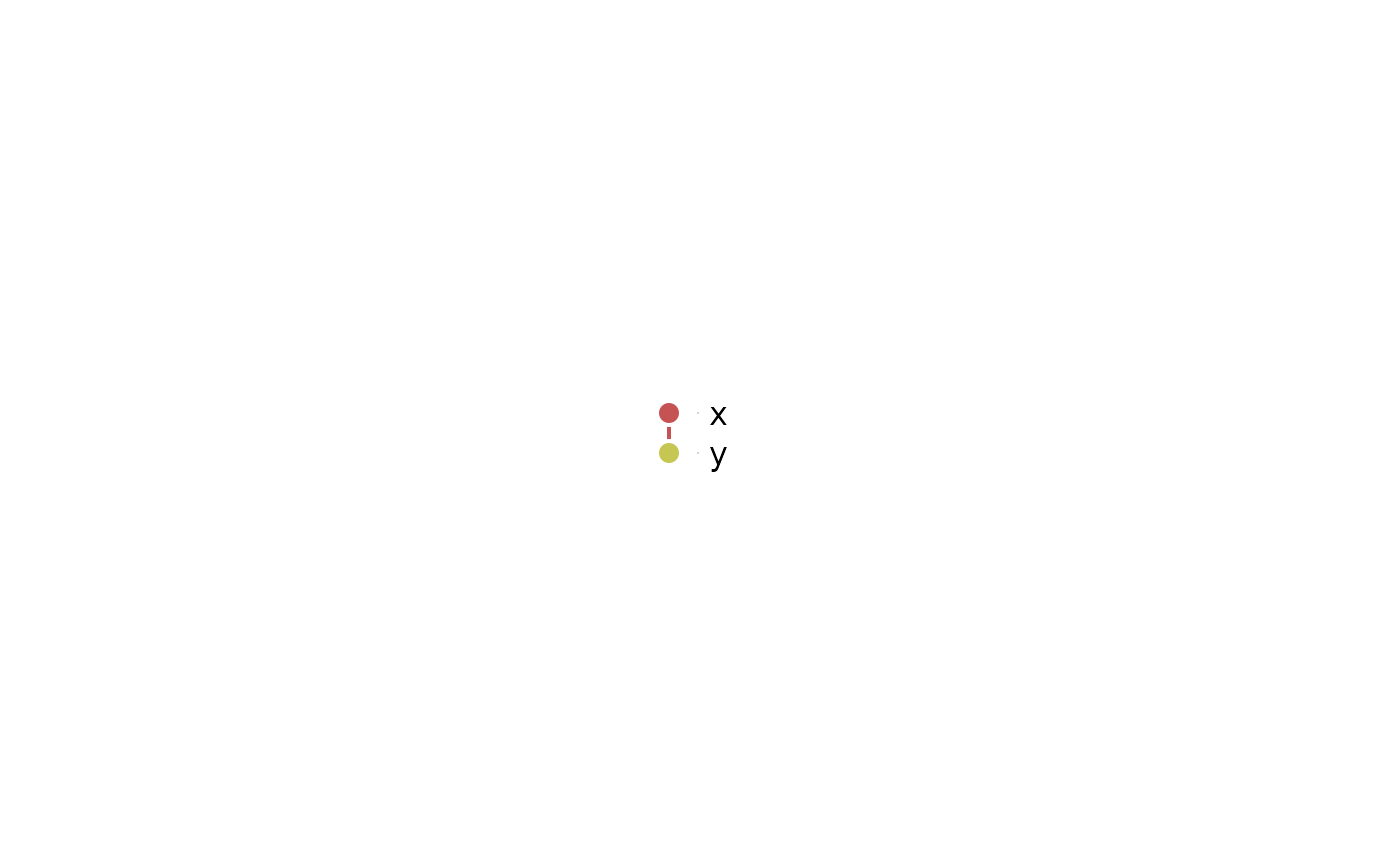
  ggplot_dag(tar_dag())
})